Mangoes, berries and citrus: how Australia's visa changes are reshaping farm labour, and what Ugandans should know
News · 2026-09-25 · 4 min read
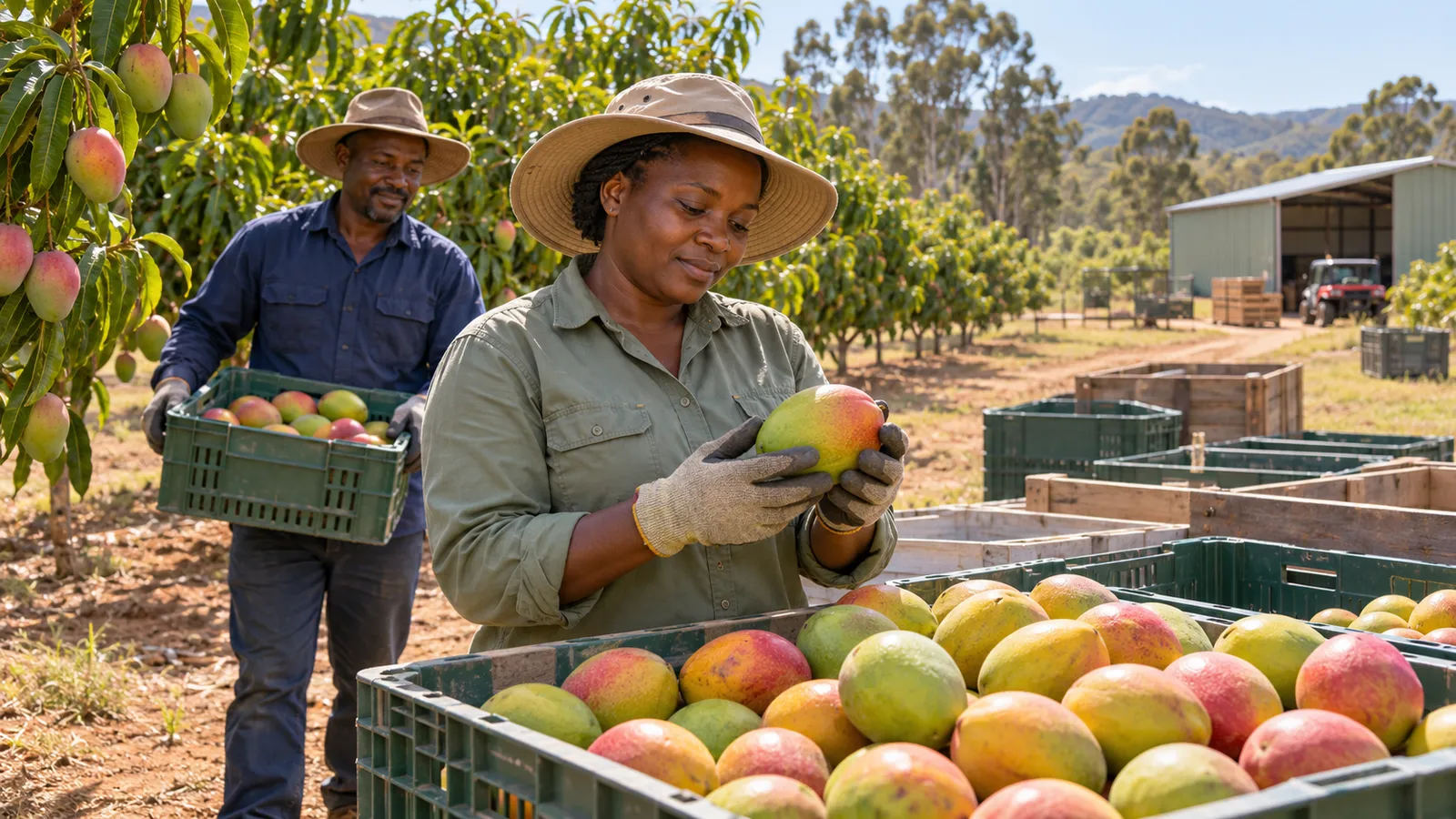
Australia's farms depend on mobile, short-term labour to bring in everything from mangoes to berries, and the announcement in late September has shaken that system. Uganda has no working holiday arrangement with Australia, so readers in Kampala or Entebbe cannot use the visa at the centre of the change. Still, four pressures on Australian farms explain a lot about the market, and one of them touches agricultural skills directly.
Pressure one: the end of a near-certain extension
Backpackers who completed 88 days of regional or remote work used to count on a second-year extension. Under the new framework, second-year visas go through a ballot with places cut from 57,000 to 45,000, while third-year places drop from 31,000 to just 5,000. Farm operators who built harvest plans around returning workers face uncertainty, and industry groups say backpackers may choose more visa-secure destinations.
Pressure two: small farms versus large farms
A Queensland researcher notes that large farms usually draw labour from the Pacific Australia Labour Mobility (PALM) scheme, a separate and more structured pathway. Smaller family-run farms without year-round work are the ones that have relied on backpackers. PALM does not replace them like for like: its workers are typically tied to longer, more structured placements, while working holiday makers follow a harvest from one region to the next over a few weeks.
Pressure three: a processing backlog
Applications from 24 of 29 eligible countries had been paused before the announcement, and processing times had stretched from days to roughly three months. With citrus and berry harvest windows opening within weeks in some regions, delay alone can leave growers short-handed regardless of the ballot.
Pressure four: agriculture on the skilled list
Agriculture is being added to the skilled worker visa list. Industry bodies have welcomed it while asking whether horticulture roles will be included and what qualification thresholds will apply. Employers cannot plan until that is clear.
What this means for a Ugandan applicant
Do not read the news as a way in. Read it as a sign of where Australia's labour gaps lie and as a prompt to check the official pages for the skilled list when it is published. If you work in farming, horticulture or agribusiness, collect evidence of your experience: crops handled, equipment used, teams supervised. Your UNEB results, Directorate of Industrial Training (DIT) certificates and employer letters form the usual base, and a Ugandan qualification never automatically equals an Australian licence, registration or skills assessment. An Interpol police clearance is requested only when a visa asks for it.
Use Build AI CV to organise a CV around results, and if you want to see how Australian farm vacancies are described, Seasonal Jobs Australia is one place to browse, provided you first confirm which visa you could actually hold. For Australian visa advice use a migration agent on the MARA register. Our related notes: the backpacker ballot explained and the farm visa fix. Browse roles on our jobs page too.
Looking ahead
For prospective working holiday makers elsewhere, the days of treating a second or third year as a near-certainty are over, and early, well-documented regional work will matter more in a ballot system. For agricultural employers, diversifying recruitment is now immediate necessity: exploring PALM partnerships, monitoring the skilled visa detail as it emerges, and allowing longer lead times for visa processing. A Ugandan reader should take a quieter lesson from the same facts. Whatever route you consider, keep your evidence organised and expect timelines to run longer than advertised.
Common mistakes Ugandan readers make
- Treating "agriculture added to the list" as "agriculture jobs now open to me".
- Following social posts that promise a working holiday visa to Ugandans.
- Planning around thresholds that have not yet been published.
- Using an adviser who is not on the MARA register.
Frequently asked questions
Why is PALM mentioned?
Because larger farms typically use it, and it works differently from the working holiday route.
What is the third-year cap?
5,000 places, down from 31,000.
Is the harvest affected this year?
Industry groups warn of a tight Christmas harvest.
Is the skilled list change final?
The addition has been announced, but the detail is still awaited.
Key takeaways
- Ballots replace near-certain extensions: 57,000 to 45,000 and 31,000 to 5,000.
- Processing delays of roughly three months worsen the squeeze.
- Agriculture joins the skilled list, with qualifications and roles still unclear.
- Use official pages and registered advice.
#harvest labour #australia agriculture #uganda #palm scheme #skilled visa list
 Harvest time, fewer workers: how a quiet visa pause hit Australia's farms, and what Ugandans can learn
 Studying in Australia to work there? What a government study says about graduate jobs, for Ugandan families
 Does your office skill still travel? Australia's AI redundancies and what Ugandan applicants should do