Orchards, packhouses and visas: how New Zealand's horticulture training reshuffle affects workers in Uganda
News · 2026-09-01 · 4 min read
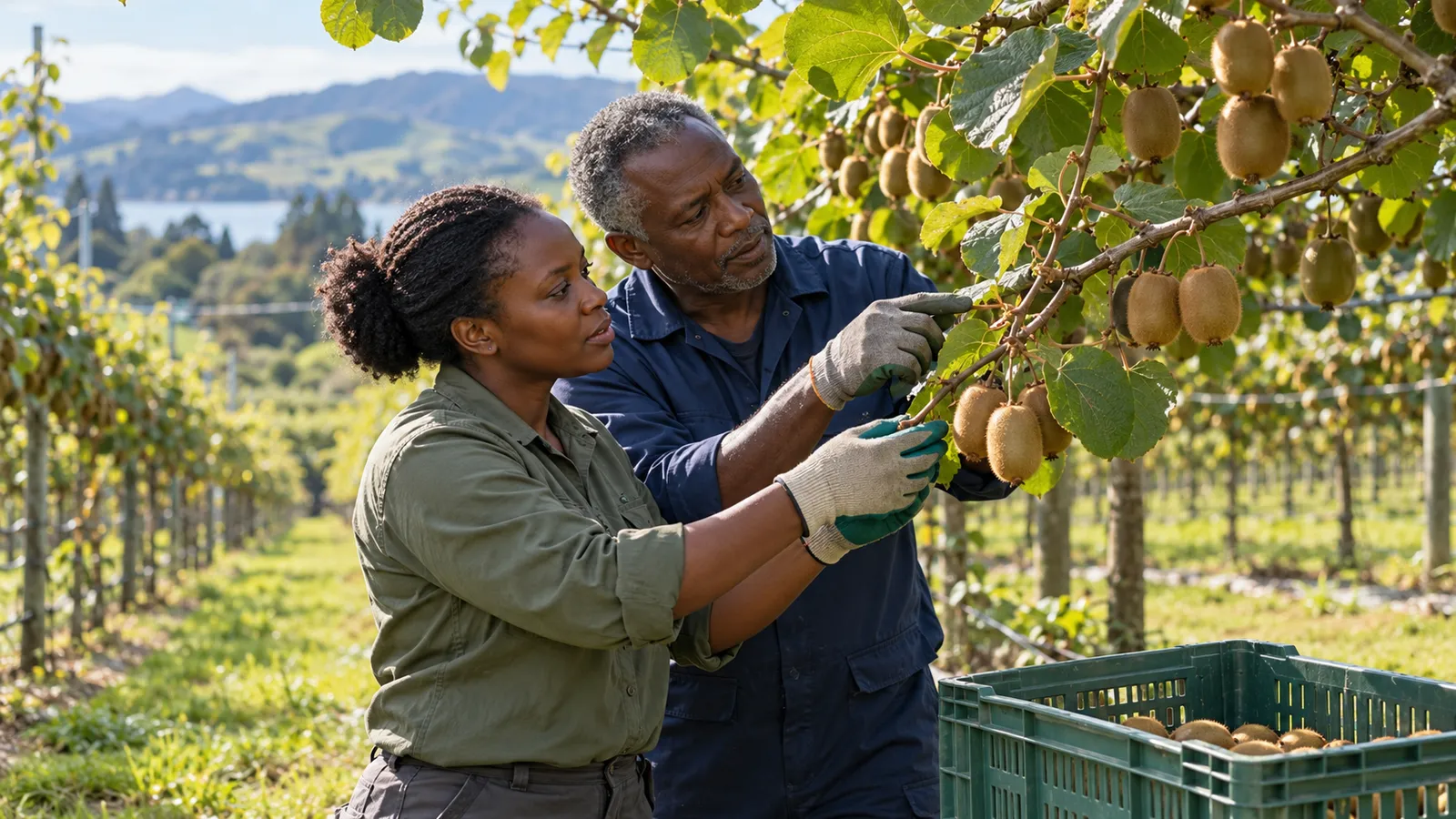
New Zealand's horticulture industry is entering a period of real uncertainty. If you are a worker from Kampala, Entebbe or a rural district in Uganda who hopes to join an orchard, packhouse or nursery on a visa, or an employer who relies on sponsored staff, you should know how the training system is being rearranged.
A new home for training
From 1 January 2026, work-based training in horticulture leaves Te Pūkenga and moves to a temporary body, the Food and Fibre Industry Skills Board. This follows years of restructuring in vocational education. It matters directly for migration because it affects whether visa holders can access training in the first place.
The workforce angle
Migrant labour is the backbone of much fruit and vegetable production in New Zealand, yet current settings have made it harder for visa holders to gain recognised work-based qualifications. One of the proposals in the sector's new Food and Fibre Workforce Capability Strategy is to restore training eligibility for workers on work visas. That would let employees move from general labour into skilled, better-paid positions, and let employers retain trained staff.
A sector under strain
Work-based enrolments in fruit and vegetable training dropped by about two-thirds between 2021 and 2024. With an ageing local workforce and persistent skill shortages, the industry leans on international labour to fill gaps that training pipelines are not addressing. Advisers and employers face a paradox: the sector that most needs a stable, skilled workforce has the least stable training pathways.
Key dates
- Until the end of 2027: the industry training organisation continues to deliver in a holding pattern, covering around 1,500 current enrolments.
- By June 2027: no new enrolments through the present arrangement.
- By 2028: regional polytechnics and private providers are expected to take over delivery, while the Skills Board steps back to setting standards.
That is a short runway. Industry bodies warn that providers may skip lower-volume qualifications that are commercially unattractive but critical, and that could remove the kinds of qualification that give migrant workers a route to skilled visa categories or residence tied to recognised trade qualifications.
A glimmer of hope
A cadetship programme piloted in Pukekohe, now expanding to the Bay of Plenty, matches apprentices with peers, shared study and a dedicated advisor who handles training compliance on the employer's behalf. Models like this could make formal training much more manageable for sponsoring businesses.
What you can do from Uganda
Treat this as background for your planning, not as a job offer. A Ugandan qualification, including a Directorate of Industrial Training (DIT) certificate, never automatically equals a New Zealand qualification, skills assessment or registration. Collect proof of your crop experience, equipment skills and supervisory work. If an application asks for police clearance, Interpol police clearance is the document to request, and only when it is asked for. Finally, speak to a licensed immigration adviser or a lawfully exempt person before paying fees to anyone.
Why sponsors are watching too
Employers that sponsor visa holders carry obligations alongside daily operations, and training adds to that load. This is why a model with a dedicated advisor and peer support looks attractive: it takes compliance work off the employer without removing the training itself.
Common mistakes workers make
Many people assume that sponsorship brings automatic training. It does not, and eligibility is what is now being debated. Others write vague CVs. Use specific details about crops, tasks and results, and consider a CV prepared with Build AI CV so your history reads clearly. Employers who hire through sponsorship should also plan a contingency if their training partner cannot promise a pathway beyond 2027.
Frequently asked questions
Who delivers training until 2027 ends?
The industry training organisation continues in a holding pattern for around 1,500 current enrolments.
What is the Skills Board's long-term role?
By 2028 it steps back into a standards-setting role only.
Why does this matter to migrants?
Because a proposal would restore training eligibility for visa holders, and training can lead to better-paid roles.
Is that proposal confirmed?
No. It is part of a strategy, not a decision.
Where can I read more on New Zealand?
See our immigration overhaul explainer and the trades and technician pathway, plus current jobs.
Key takeaways
- Training moves to a temporary skills board from 1 January 2026.
- No new enrolments under the old arrangement by June 2027; new providers by 2028.
- Enrolments fell by about two-thirds from 2021 to 2024.
- Visa-holder training eligibility is proposed, not confirmed.
- Use a licensed immigration adviser and keep detailed records.
#migrant workers #horticulture #visa sponsorship #training #uganda
 Productivity or population? What Australia's new forecasts say about the real lever, for Ugandan workers
 Studying in Australia to work there? What a government study says about graduate jobs, for Ugandan families
 Does your office skill still travel? Australia's AI redundancies and what Ugandan applicants should do