Waiting on an Australian visa for a meat or pork job? What Ugandan workers can learn from a stalled abattoir
News · 2026-09-07 · 4 min read
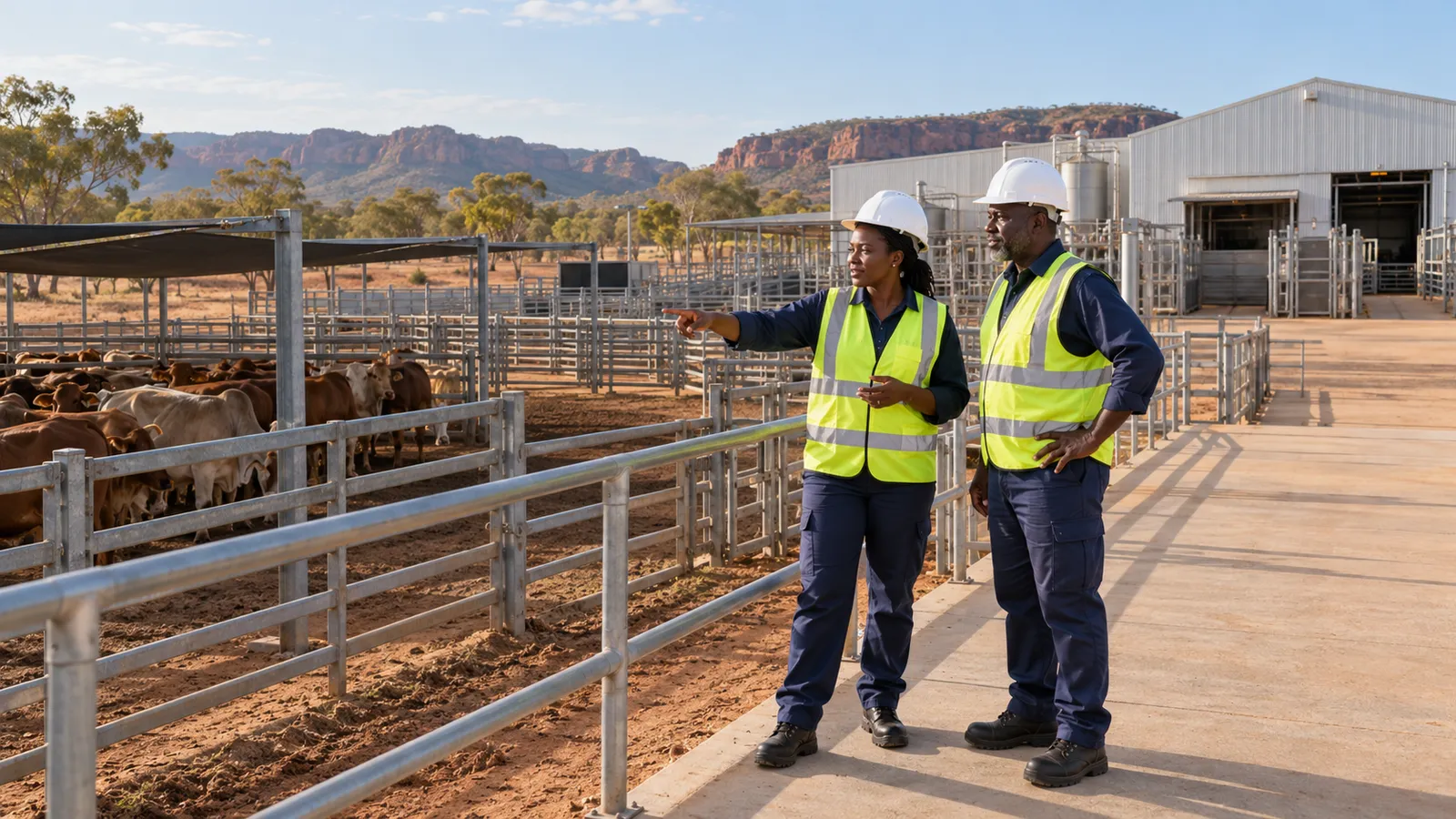
Workers in Kampala and Entebbe who hope to join an Australian meat or pork operation should look closely at what is happening in Western Australia. A visa policy built to protect local jobs has collided with industries that have never had a local labour pool, and the people caught in the middle are employers who have found workers and workers who have started to plan their lives around a start date.
What changed in July
The Department of Home Affairs introduced a five-tier system for prioritising visa applications. Offshore applicants in industries outside law enforcement, defence, construction, healthcare and teaching land at the very bottom. Neither meat processing nor pork production made the priority list.
A remote abattoir's experience
Near Broome in the Kimberley, an abattoir advertised 60 skilled positions and received exactly one application from an Australian resident, and that person did not have the required skills. This is not about employers preferring cheaper labour. It is about geography and workforce economics. A remote operation cannot attract enough local interest to staff itself, regardless of pay, because few skilled meatworkers are willing to relocate to the far north of the state.
The cost of delay is concrete. Roughly 30 skilled workers from the Philippines, plus 13 partners, had been lined up to reopen what was formerly a meat company in the Kimberley. About $390,000 in visa fees has been paid. The opening, planned for this year, has moved to a soft launch in February and a full commercial opening in April, while thousands of cattle need somewhere to go.
A piggery living the same problem
Further south, near Narrogin, a pork producer draws about 90 per cent of his workforce from overseas. He is expanding from 1,500 to 2,500 sows, with piglets due in six months, and has no certainty that incoming workers will have visas in time. Many were recruited in January, and some have already resigned from their previous jobs.
What this teaches a job seeker
Employers using the Meat Industry Labour Agreement stream have been told that applications are processed in line with program requirements and established processing arrangements. In practice there is no visibility on timing and, as one employer put it, nobody to call for an update. So if you are offered a role:
- Ask what the employer knows about timing, and when they last had news.
- Avoid resigning from a current job until the visa is granted.
- Keep your documents current, including an Interpol police clearance if one is requested.
- Have a plan for your finances if your start date moves.
It also helps to show your experience clearly to any employer, and a verified profile can help: Talent Tabloid is optional, and a verified Talent Tabloid profile lets employers check your experience and can help your application stand out. Each advert on our jobs page states its own terms. Related reading: the farm visa fix: a band-aid or a breakthrough and why Australia's talent gap is about location, not headcount.
The wider tension
Prioritisation frameworks built around protecting the national labour market do not always account for regions where a local workforce realistically does not exist. Fixes could include carve-outs, faster labour agreement processing or clearer communication from the department. Until one arrives, expect more remote employers to face the same bind: workers identified, fees paid and operations stalled.
Common mistakes workers make while waiting
- Leaving a stable job on the strength of a start date that has not been confirmed.
- Telling family a move date before a visa decision.
- Failing to ask the employer for updates in writing.
- Following advice from anyone other than a migration agent registered with MARA.
Frequently asked questions
Why are these industries not prioritised?
The list favours law enforcement, defence, construction, healthcare and teaching; meat and pork are not on it.
Do local applicants fill these jobs?
In remote areas very few apply; one abattoir had a single local application for 60 positions.
Is a sponsored role still possible?
Possibly, but timing is uncertain and each advert states its own terms.
Should I resign before the visa arrives?
It is safer to wait until it is granted.
Who can advise me?
A migration agent registered with MARA.
Key takeaways
- Meat and pork are not on the new priority list.
- Remote employers cannot recruit enough local workers.
- Delays are costing fees, start dates and business plans.
- Protect yourself by waiting for a granted visa before resigning.
#australian visa #meat processing #pork industry #visa delays #uganda #sponsorship
 Sponsored by an Australian employer? Why your visa may now take a year, and how Ugandans can plan for it
 What an Australian skilled visa now costs in government charges: a budgeting guide for Ugandan applicants
 Training visa 407 from Uganda: the approvals you need before you lodge, and the bridging visa risk if you do not