Seven findings from Australia's welding survey, and what they mean for you as a tradesperson in Uganda
Tips · 2026-09-30 · 4 min read
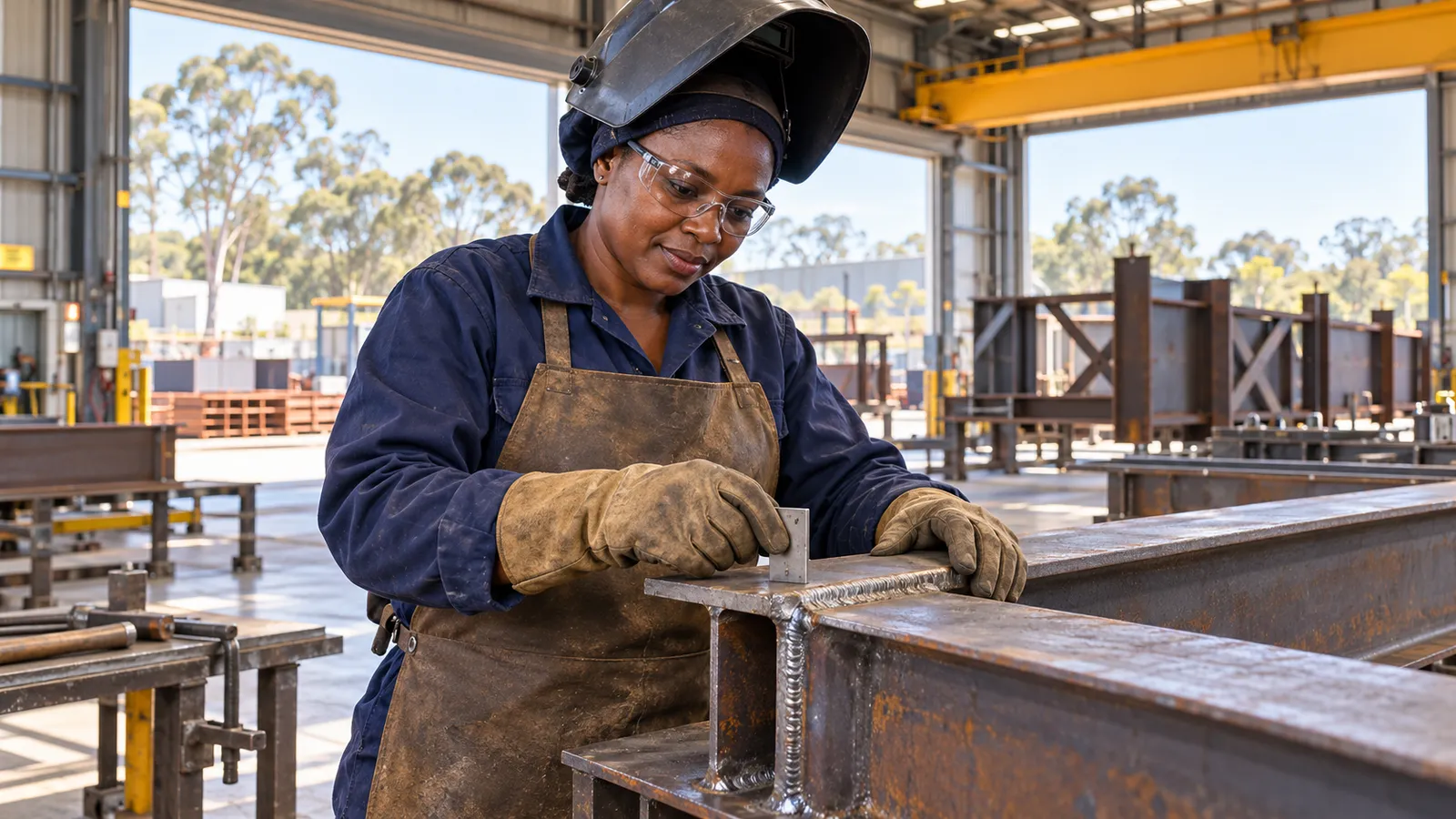
Australia plans major infrastructure, defence and renewable energy projects, and it may not have enough skilled hands to build them. A fresh industry survey puts numbers on that worry. If you weld or fabricate in Kampala, Entebbe or Jinja, here are seven findings and a sensible reading of each.
Finding one: nearly nine in ten see a shortage
89.2 per cent of respondents say the country does not have enough qualified welders for the work coming. That points to a long-term need, since these projects take years to deliver.
Finding two: work is patchy
Six in ten respondents had three months or less of confirmed work, and one in five had no confirmed pipeline. Almost 60 per cent of fabrication workshops were running below 75 per cent capacity. Businesses blamed a lack of work and a lack of skilled staff. In other words the issue is a mismatch, not an absence of demand.
Finding three: compliance is a flashpoint
About 71.4 per cent said imported fabricated products at least sometimes fail to meet Australian standards, and 53.6 per cent said it happens often or very often. That explains why the industry wants independent verification of fabricated steel wherever it is made, stronger local content rules, backing for a proposed national fabrication authority, help for small and medium-sized firms with advanced manufacturing technology, and contracts judged on whole-of-life value rather than the cheapest upfront price.
Finding four: costs are squeezing firms
Some 82.1 per cent reported higher energy prices and 78.5 per cent higher material costs, yet only 28.5 per cent lifted their selling prices. Nearly 40 per cent saw gross profit margins fall.
Finding five: investment continues
Half of respondents increased technology investment, 42.8 per cent invested more in staff training and 39.2 per cent in research and development. Employers who invest in people and equipment tend to be the ones worth working for.
Finding six: training is on the agenda
The sector is calling for more apprenticeships, pre-apprenticeship programmes, TAFE pathways and industry-led training. Migrants with strong existing skills may fit into this system, and some may find further training helpful for skills assessment or licensing. Your Directorate of Industrial Training (DIT) certificate is useful evidence of training, but it is not automatically an Australian qualification or licence.
Finding seven: the trade feels undervalued
About 79.5 per cent of respondents felt welding does not get the respect it deserves. The industry is trying to lift the profile of the trade, which could improve pay and conditions over time.
Putting it to use
Because standards matter so much, employers are likely to value workers who can demonstrate them. Collect weld test records, certificates, employer letters and a clear list of the processes and materials you have worked with. Present them in an English CV; Build AI CV can help you structure one. For qualification recognition, explore RPLDirect.
Related reading: why skilled trades matter in migration and the builder shortage. Current vacancies are on our jobs page.
Keep the evidence simple. A one-page summary of your trade history, with dates, employers, materials and codes, makes every later conversation easier, whether with an employer, an assessor or an adviser.
Common mistakes with shortage news
- Assuming a shortage in one industry settles your visa position.
- Ignoring the requirement to check current Skills in Demand visa settings, occupation lists and assessment rules with the Department of Home Affairs.
- Relying on a general trade certificate without evidence of specific skills.
- Using an adviser who is not on the MARA register for Australian advice.
Frequently asked questions
Is demand likely to last?
The survey suggests qualified people are the bottleneck for long-delivery projects.
Why does compliance matter so much?
Because many respondents say imported products fail Australian standards, employers value workers who understand them.
Will training help me?
It may help for skills assessment or licensing, depending on your situation.
Where do I check the rules?
On the Department of Home Affairs website, or with a MARA-listed migration agent.
Key takeaways
- The survey reports a shortage of qualified welders alongside patchy project pipelines.
- Compliance with Australian standards is a major theme.
- Document your skills carefully and plan for assessment.
- A shortage is not the same as visa eligibility.
#welding #fabrication #australia #survey findings #trades
 Degree or trade? What a Kampala electrician and his graduate cousin should know about Australia's skilled demand
 Carpentry, bricklaying or tiling: a practical route into Australia for Ugandan students who prefer hands-on work
 Is your office job safe from AI? What Ugandan professionals should weigh before an Australian visa plan