Rising unemployment, yet builders short: what Ugandan carpenters, electricians and plumbers should watch
News · 2026-08-21 · 4 min read
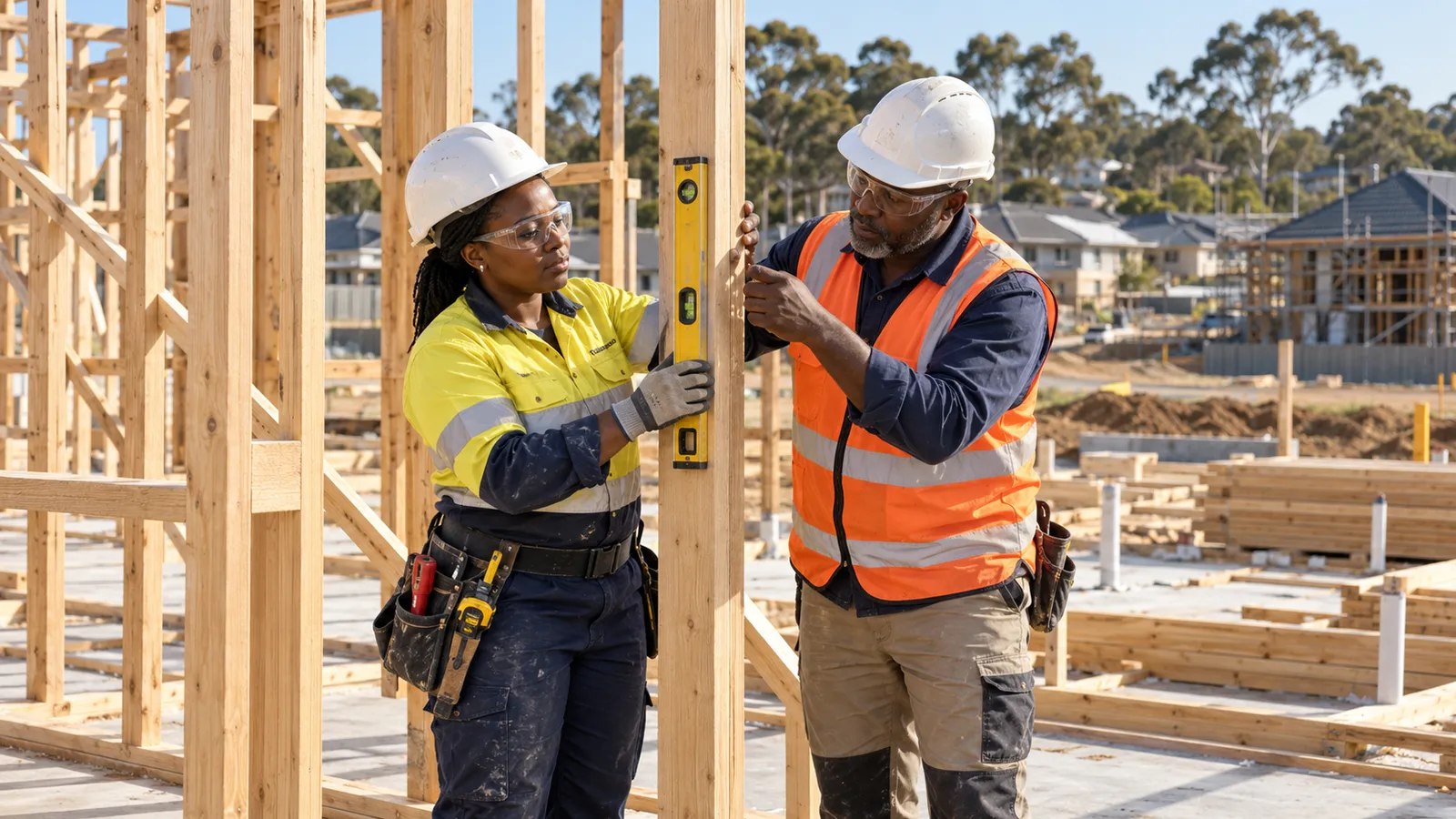
A weaker job market usually means employers can pick and choose. In Australian construction it does not. Unemployment has risen, and builders still cannot find the workers they need. Carpenters, electricians and plumbers in Kampala and Entebbe should know why, and what industry wants changed.
Two facts that look like opposites
- The latest ABS Labour Force figures, for July 2026, show unemployment at 4.5 per cent, with around 15,800 jobs lost, mostly part-time.
- The building and construction industry is still hundreds of thousands of workers short of what it needs.
The reason is that the shortage sits in particular trades. Apprenticeship commencements have fallen to a five-year low, so the pipeline of future tradies is shrinking while housing demand speeds up.
The target that raises the stakes
Under the National Housing Accord, Australia has committed to building 1.2 million new homes by mid-2029. Olympic infrastructure and a wave of critical projects are already underway on top of that. Without workers to swing hammers, pour concrete and manage sites, the plan does not work.
Training is necessary, but it is slow
Industry voices call for reversing recent cuts to apprenticeship incentives and expanding fee-free TAFE places. They are sensible steps, but training takes years and the housing problem is measured in months. That mismatch is where skilled migration should be doing more, yet the system is slow, costly for employers and applicants, and its occupation lists and visa pathways do not consistently put the most-needed trades first: carpenters, electricians, plumbers and site supervisors.
Why migration gets named
Industry voices do not say migration replaces training. They say training cannot move fast enough on its own, so a faster, clearer skilled visa system is the tool that can add people while the next generation of tradespeople is still learning. They also point out that the present system does not always put the trades Australia most needs at the front of the queue, which is why prioritisation appears on every reform list.
The reform list from industry
These are the changes that industry voices say would make the biggest practical difference to employers and to workers qualified overseas.
- Faster processing for construction occupations, so employers are not left waiting months while projects stall.
- Clearer, more generous pathways for tradespeople qualified overseas, including better recognition of overseas trade certifications.
- Regional and employer-sponsored visa settings that reflect where housing demand is actually highest, not just in capital cities.
- Genuine prioritisation of construction roles on skilled occupation lists.
Reading this from Uganda
Rising unemployment does not change the basic arithmetic of too few workers and too much demand, and a training pipeline that cannot scale quickly. For you, the practical steps are plain. Prepare UNEB results, DIT certificates, references and records of finished work. Ask whether your trade needs a skills assessment or licence in Australia, since a Ugandan certificate does not automatically count as one. If a police certificate is requested, find out how to obtain Interpol police clearance. Check options with a migration agent registered with the MARA. These reforms are proposals, so follow official pages for actual rules and watch the job listings for roles.
Common mistakes while reform is argued about
- Believing that rising unemployment means employers no longer need overseas trades.
- Counting on regional settings that have not been confirmed.
- Using an unlicensed adviser; ask for MARA registration.
- Skipping a look at New Zealand, where trade pathways to residence are set out separately.
When you prepare your profile, an optional verified Talent Tabloid profile can help employers check your work history.
Frequently asked questions
What was the unemployment rate in July 2026?
4.5 per cent, according to the ABS figures cited here.
Why are apprenticeships mentioned?
Commencements are at a five-year low, which means fewer new tradespeople are coming through.
Which trades does industry want prioritised?
Carpenters, electricians, plumbers and site supervisors.
Are the reforms in force?
No. They are calls from industry voices.
Is this only for Ugandans?
No. Jobs are open to everyone; this article is written for Ugandan readers.
Key takeaways
- Unemployment rose, but construction still needs hundreds of thousands more workers.
- The housing target of 1.2 million homes by mid-2029 depends on more people on site.
- Industry wants faster processing, better recognition and prioritised trades.
- Further reading: why occupation may outweigh the migration number.
#construction #carpenters #electricians #plumbers #australia #migration reform
 What a shortfall of 83,000 tradespeople really looks like, and how Ugandan carpenters and electricians can respond
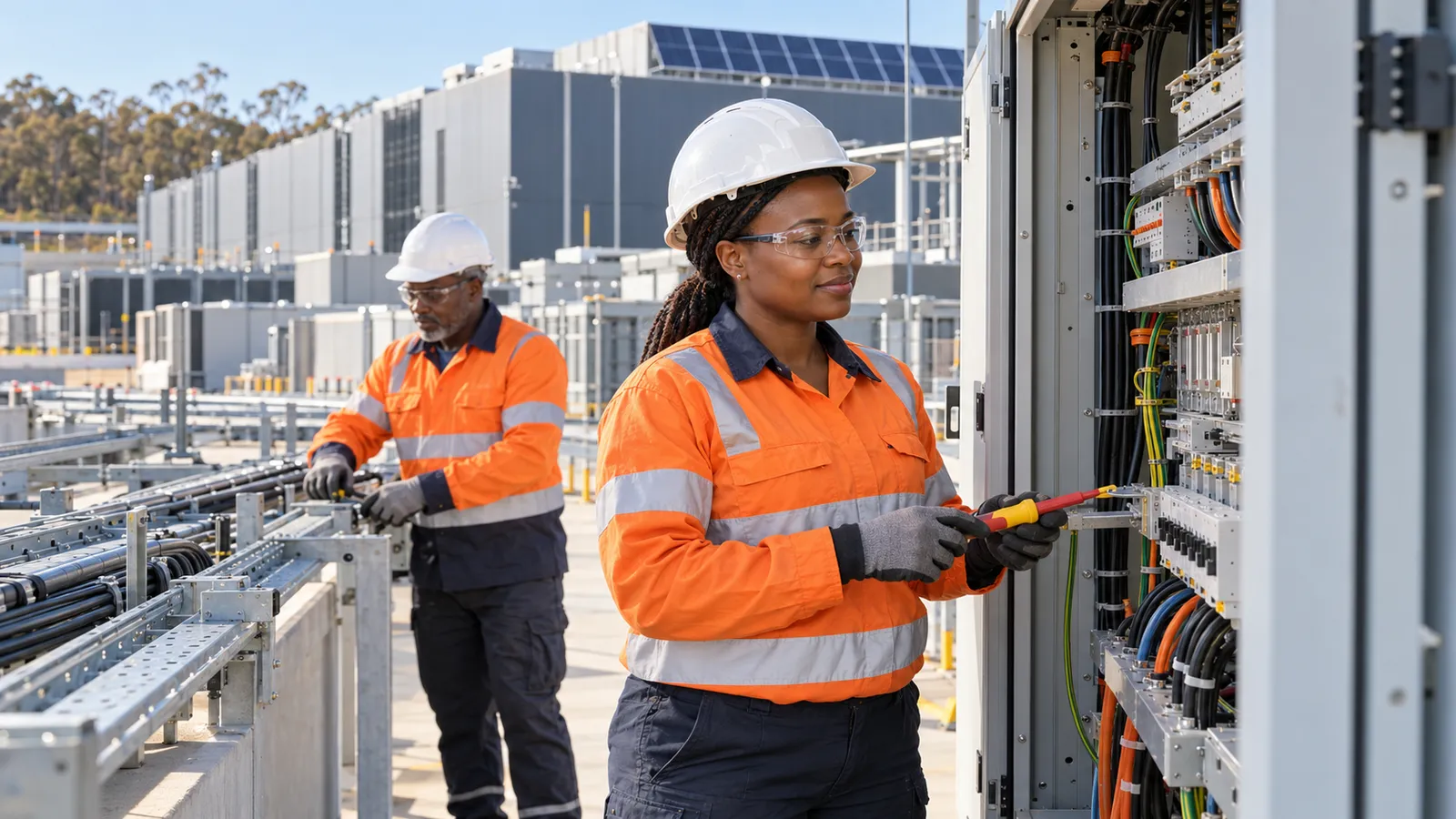 An electrician in Kampala asks: is Australia's energy trades gap a real opening?
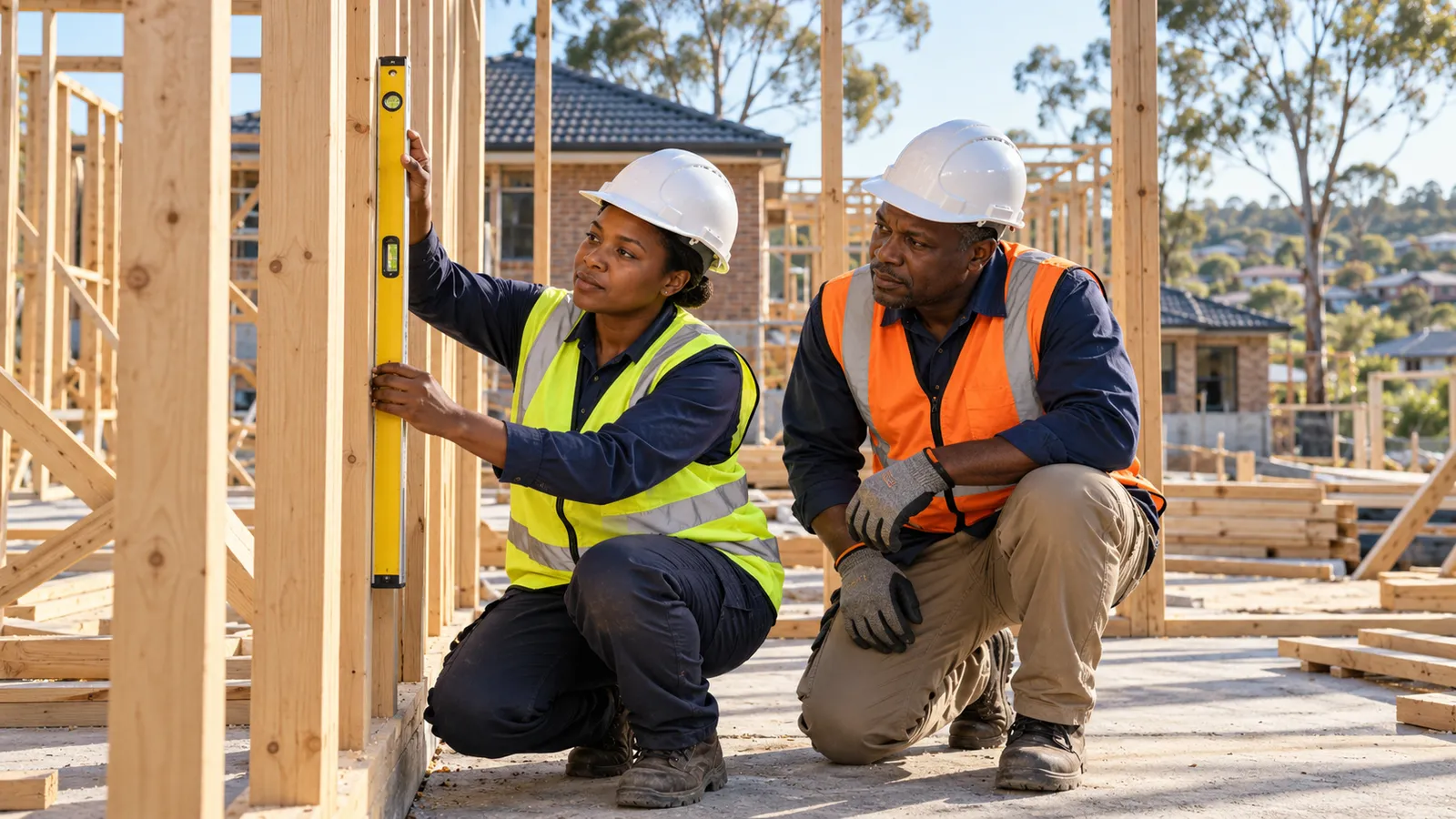 Firms folding, homes unbuilt: what Australia's 244,000 dwellings under construction say to Ugandan tradespeople