An electrician in Kampala asks: is Australia's energy trades gap a real opening?
News · 2026-09-05 · 4 min read
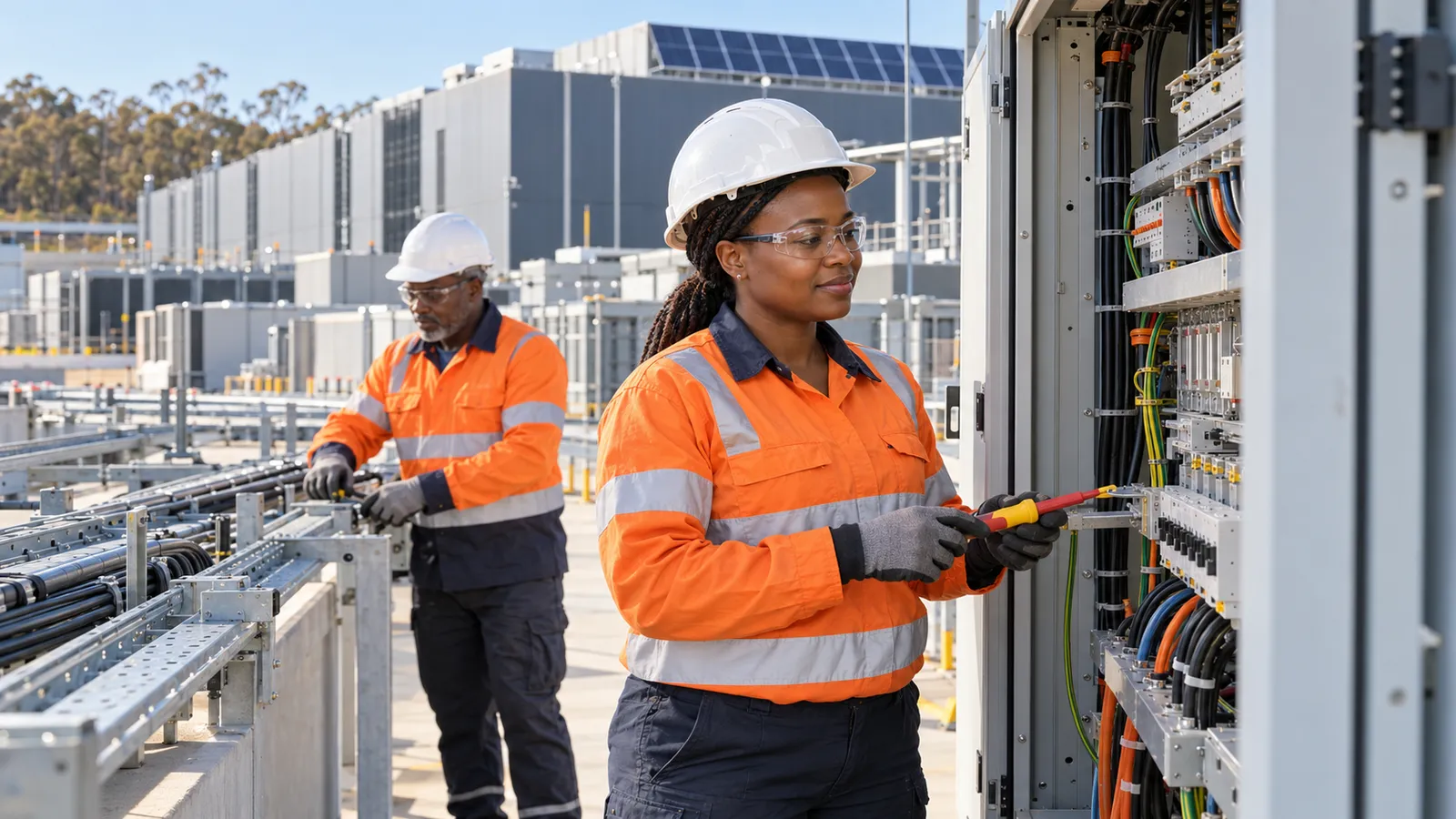
Imagine an electrician in Kampala with years on commercial sites who reads that Australia is desperate for people like him. Is it a real opening? The honest answer has two parts: the demand is real, and the route is still demanding. Here is how the story looks when you read it as that electrician would.
The size of the gap
A new industry skills report says Australia needs roughly 72,000 additional electricians, technicians and related tradespeople by 2030. A year earlier the same body forecast a shortfall of 42,000, so the picture has worsened fast, and data centres are a main reason. Treasury figures put the data centre construction pipeline at around $150 billion by 2030. More than 160 data centres are already running and another 130 are planned, and the sector alone is expected to need an extra 13,000 energy trades workers.
Add the Housing Accord target of 1.2 million new homes and the continuing renewable energy transition, and three national projects are drawing on the same shallow pool at once.
What the shortage looks like inside Australia
For employers it has become a contest over pay. Apprentices are poached by big infrastructure projects before they finish training. Small electrical contractors, the firms that train most newcomers, lose experienced staff to data centre jobs they cannot match. Apprenticeship completion is a solid 70%, but not enough workers arrive fast enough. Industry groups want hiring quotas on major projects and compensation for small businesses that lose trained people.
Where overseas workers may fit
When a local training pipeline cannot keep pace, employers and policymakers look further afield. For overseas electricians, instrumentation technicians and energy trades workers, that may mean demand that lasts beyond one project, several entry points across data centres, housing and renewables, regional or project-based openings outside capital cities, and employers with a financial reason to consider skilled visa pathways. Each advert still sets its own terms, and none of this is a promise.
Our Kampala electrician has things to prepare. His Directorate of Industrial Training (DIT) certificate shows his training, and a UNEB result shows his schooling, but neither is automatically an Australian licence, skills assessment or registration. Start the assessment conversation early with RPLDirect, and put his project history on a clear, up-to-date CV, which Build AI CV helps with.
What to watch, and when
Over the next 12–18 months, watch for government workforce guidelines for data centre developers (Canberra has been pushing operators to invest in local training since March), revisions to skilled occupation lists, incentives like the existing $10,000 clean energy apprenticeship incentive that might one day extend to recognised overseas qualifications or bridging programmes, and regional project locations that could align with regional skilled visa streams.
For wider context read why construction skills need migration reform and why the builder shortage is a migration opportunity if the country acts fast. Current vacancies are on the jobs page.
Read the wages war honestly. Higher pay on data centre projects is a sign of demand, but it also tells you that experienced local electricians have choices, so overseas applicants stand out through documented skill rather than through the shortage alone. Employer letters that describe the work you did, the equipment you handled and the standards you followed carry more weight than a general statement that you are experienced. Gather those letters now, while former supervisors are still easy to reach.
Common mistakes Ugandan trades workers make
- Taking a media headline as proof that a visa is available.
- Paying an agent before understanding the assessment steps.
- Letting certificates, site references and licences get out of date or out of order.
- Seeking guidance from anyone who is not a migration agent registered with MARA.
Frequently asked questions
Is the shortage the same for every trade?
The report focuses on electricians, technicians and related energy trades.
Does a DIT certificate count in Australia?
It shows your training, but assessment and any state licensing are separate steps.
Where are the jobs located?
Many large builds sit outside major capital cities.
Will occupation lists change?
A shortfall of this size often feeds revisions, but nothing is certain.
Where do I start?
With your documents, a clear CV and advice from a migration agent registered with MARA.
Key takeaways
- Australia needs roughly 72,000 more electricians and related workers by 2030.
- Data centres, housing and renewables compete for the same people.
- Demand is real, but qualifications still need assessment.
- Prepare documents now and watch policy changes.
#energy trades #australia #electricians #data centres #uganda #skilled workers
 Degree or trade? What a Kampala electrician and his graduate cousin should know about Australia's skilled demand
 Does your office skill still travel? Australia's AI redundancies and what Ugandan applicants should do
 Post-study work in Australia: how a Coalition proposal could reshape plans for Ugandan students