A trade with no licence and almost no apprentices: what Canberra's bricklayer gap offers builders in Uganda
News · 2026-08-24 · 4 min read
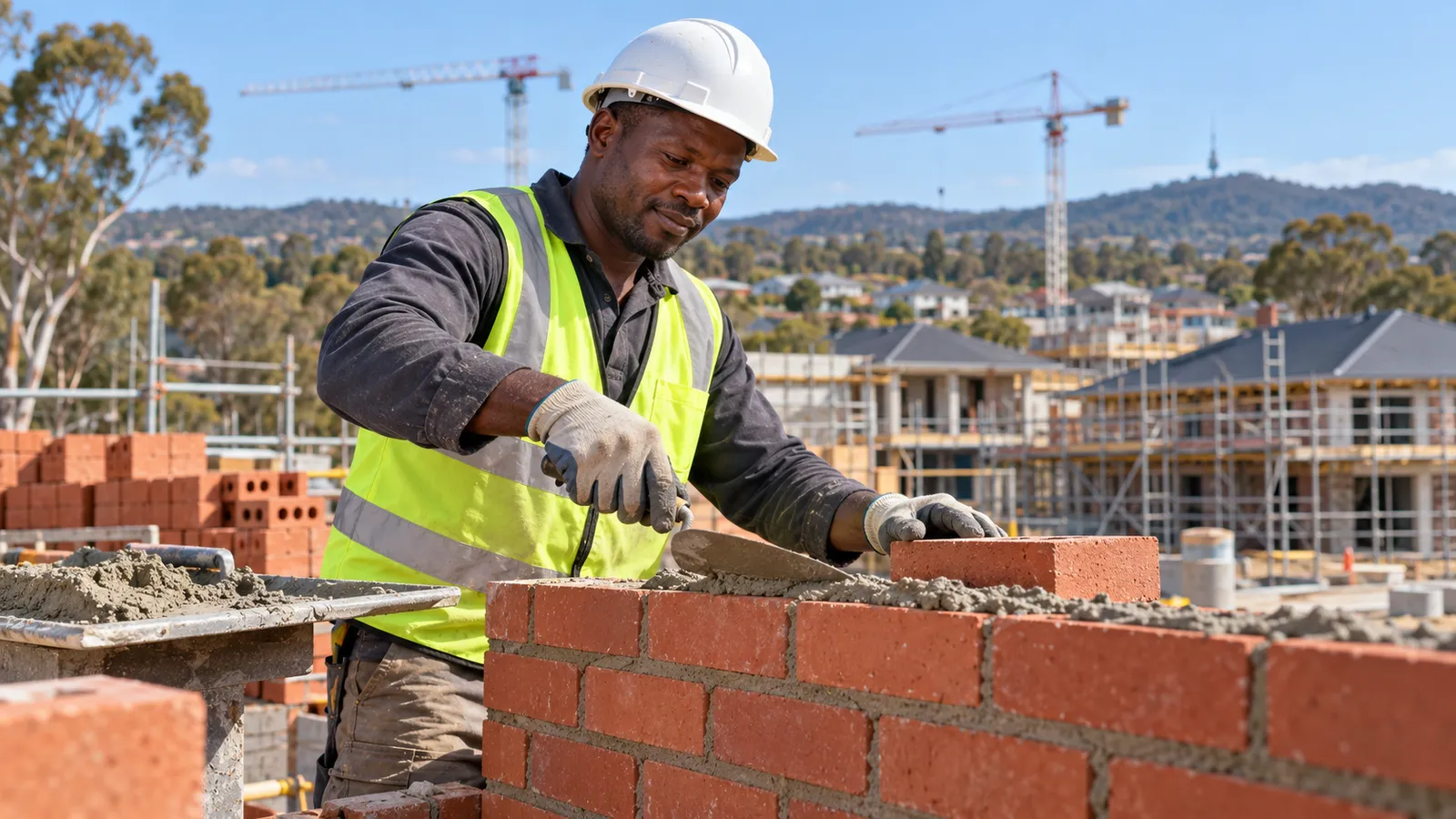
If you lay bricks, build walls or manage a site in Kampala or Entebbe, a story from Canberra deserves your attention. Only seven people are training to become bricklayers in the whole ACT region, bricklaying is not a licensed occupation there, and local employers say they cannot find enough reliable tradespeople. It sounds like an easy opening. The reality is more careful than that.
The shortage in plain terms
In the same period that the construction workforce grew by 10 per cent, apprentice numbers fell by 20 per cent. Those who remain in the trade tend to be older than their peers heading towards retirement. A business owner who has run a bricklaying firm for over two decades says work is plentiful; it is dependable people that are scarce.
The ACT government has committed to deliver 30,000 new homes by 2030, a goal that cannot be met with seven apprentices in the pipeline.
What "no licence" really means
In the ACT, anyone can legally lay bricks on a commercial or residential job without showing a qualification. A trainer with 30 years in the industry sees inconsistent workmanship from people who were never properly taught. For an employer, that makes a formally trained bricklayer easier to trust.
It also puts the burden on you. Nobody will filter you for them, so you must show your training and your experience in a clear way. That is true even though this one rule is relaxed: it is about local licensing, and does not remove the need to meet the requirements of the visa you choose.
Why the pipeline is broken
- Most bricklaying apprentices are trained through residential building, which is currently soft, even though commercial and infrastructure projects, including light rail, keep labour demand high.
- Far more apprentices start than finish, because the trade is physically demanding and many spend too much time labouring instead of building trowel skills.
- On many sites tradespeople over 40 are the norm, so without trained apprentices or skilled migrants the expertise simply retires.
What a Ugandan bricklayer can do
- Gather your Directorate of Industrial Training (DIT) certificates, UNEB results and references from past employers. A DIT certificate does not automatically equal an Australian licence or skills assessment.
- Photograph finished work and note the type and scale of each job.
- If a police certificate is requested, the usual Ugandan document is Interpol police clearance.
- Ask an adviser registered with the Migration Agents Registration Authority (MARA) which visa routes fit your trade, and confirm the price of the advice.
- Prepare for physical, demanding work. Even people who love the trade find it hard.
A verified profile can help employers see your work history. Talent Tabloid offers one as an optional extra, and Build AI CV can help with a trade CV.
Common mistakes when reading a shortage
- Believing a shortage in one city is a job offer for you.
- Skipping evidence because the local rules look relaxed.
- Planning without checking how a visa assesses your qualifications.
- Underestimating the physical demands.
Related reading: why skilled tradespeople are a migration fast track, Australia's need for tradies and the welding shortage.
Frequently asked questions
Why are there so few apprentices?
The residential work that trains most apprentices is soft, retention is poor and many drop out before they are useful on site.
Does the lack of a licence mean anyone can do the job?
Legally, yes in the ACT, but employers value properly trained bricklayers because workmanship is inconsistent without training.
Will my Ugandan certificate be enough?
It does not automatically equal an Australian licence or assessment. Check what the visa you choose asks for.
Is this a job offer?
No. It is evidence of demand. Applications and visas still depend on your own qualifications and the rules.
Who should I ask for advice?
An agent registered with MARA for Australia, or a licensed immigration adviser or lawfully exempt person for New Zealand. Always agree fees in writing.
Key takeaways
- Only seven bricklaying trainees exist in the ACT region.
- Construction grew 10 per cent while apprentice numbers fell 20 per cent.
- Bricklaying is not licensed in the ACT, so you must prove your own training.
- Demand is supported by a target of 30,000 homes by 2030.
- Prepare evidence, check visa requirements and use registered advice.
#bricklaying #construction #trade skills #australia #uganda
 Firms folding, homes unbuilt: what Australia's 244,000 dwellings under construction say to Ugandan tradespeople
 Carpentry, bricklaying or tiling: a practical route into Australia for Ugandan students who prefer hands-on work
 Does your office skill still travel? Australia's AI redundancies and what Ugandan applicants should do